

Key Takeaways
- Clear eyesight helps children process information and interact well with peers
- Refractive errors and eye coordination problems can make schoolwork difficult
- Physical signs like squinting and frequent headaches often point to vision trouble
- Academic struggles with reading and homework can relate to poor eyesight
- A comprehensive exam with an eye doctor in Richmond District helps identify hidden visual hurdles
Vision Problems Make School Harder
Our team at Total Vision Richmond understands that small changes often happen because poor eyesight makes school tasks difficult for children. Uncorrected vision problems can affect learning by slowing down information processing and making reading or focusing at a distance physically uncomfortable.
Children rely heavily on their visual skills to absorb new information in the classroom. When they struggle to see clearly, they might fall behind in their studies or feel unsure during group activities. Spotting the signs of vision trouble early with routine children’s eye exams helps your child return to their normal academic and social routines.
The Connection Between Eyesight & Child Development
How Eyes Process Information
Your brain relies on clear visual input to understand the world around it. When a child has poor eyesight, their brain has to work harder to perform even simple tasks like reading words on a page or numbers on a board.
This extra effort slows down information processing speed. As a consequence, children with vision problems often take longer to finish tasks or can’t complete those tasks at all.
Catching these visual hurdles early helps your child thrive at school.
Effects on Social Skills
Clear vision helps kids feel comfortable with group activities. When kids can see the ball coming or recognize a friend across the playground, they jump into play without hesitation.
On the other hand, uncorrected eyesight can make sports difficult and frustrating. Many children withdraw from sports because they can’t track moving objects effectively. Glasses or other vision support can help your child interact much more easily with their peers.
Common Eye Conditions in School Children
Refractive Errors Like Nearsightedness
Children with nearsightedness often struggle to see the front of the classroom. As a result, they might copy notes down incorrectly or constantly ask a neighbor for help.
Farsightedness makes near tasks feel exhausting, while astigmatism causes blurriness at all distances, which makes many activities harder.
Issues With Eye Coordination
A child’s eyes need to work together in order to focus properly. However, sometimes the eyes fail to team up correctly. Poor teamwork can lead to double vision and other issues for your child.
Tracking problems in particular make text difficult to read and understand.
Physical Signs to Spot at Home
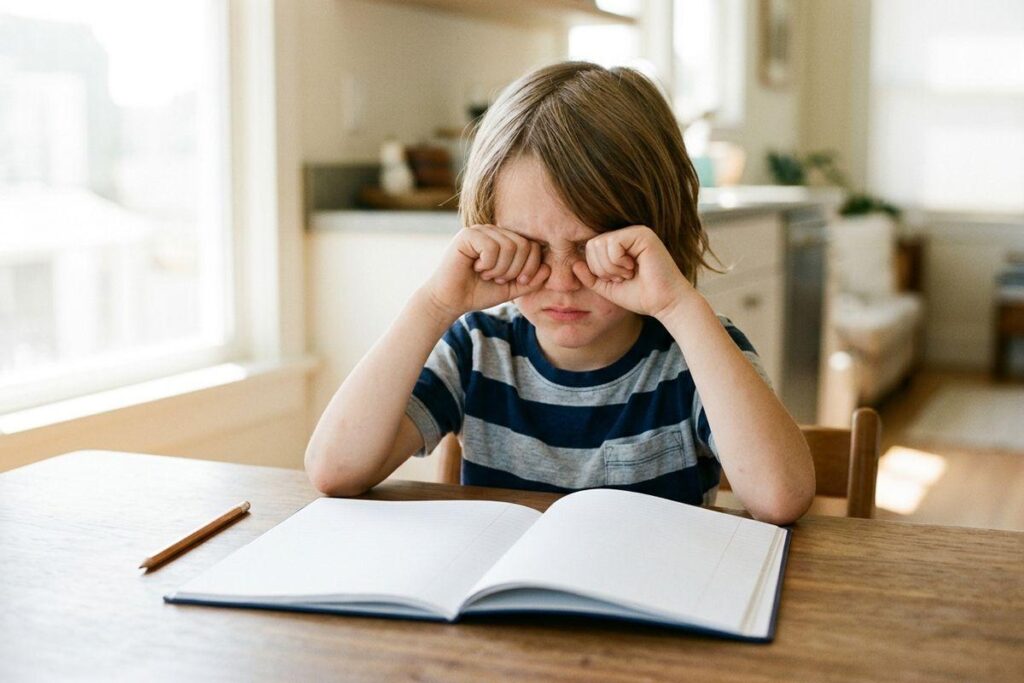
Frequent Eye Rubbing and Squinting
You can often catch visual discomfort by watching how your child behaves after school. Look for a few common behaviors:
- Squinting at the television
- Constant eye rubbing suggests eye fatigue
- Covering one eye points to visual discomfort
Complaints of Headaches
Children rarely know how to explain eye strain, so they don’t always ask for help. They often just complain that their head hurts. Watch for these specific indicators:
- Frequent head pain that often follows homework sessions
- Complaints about dizzy spells
- Watery or red eyes
Academic Hints of Vision Trouble
Dislike of Close Work
If your child is developing vision issues, they might start to dislike homework routines that they used to complete without issue. A drop in enthusiasm often relates directly to how their eyes feel. Short attention spans, for instance, are often linked to vision-related issues.
School tasks become unnecessarily difficult for kids when they have to force their eyes to focus for long periods. They might push their books away or find excuses to leave the study table.
Poor Text Comprehension
Vision issues can cause issues with reading and comprehension. For instance, if your child skips words, this can indicate struggles with eye tracking. Similarly, poor handwriting sometimes results from hand coordination troubles caused by eyesight.
If your child reverses letters past the age of 7, this also warrants a quick check with their eye doctor.
The Value of Preventative Eye Care
Comprehensive Exams Versus Basic Tests
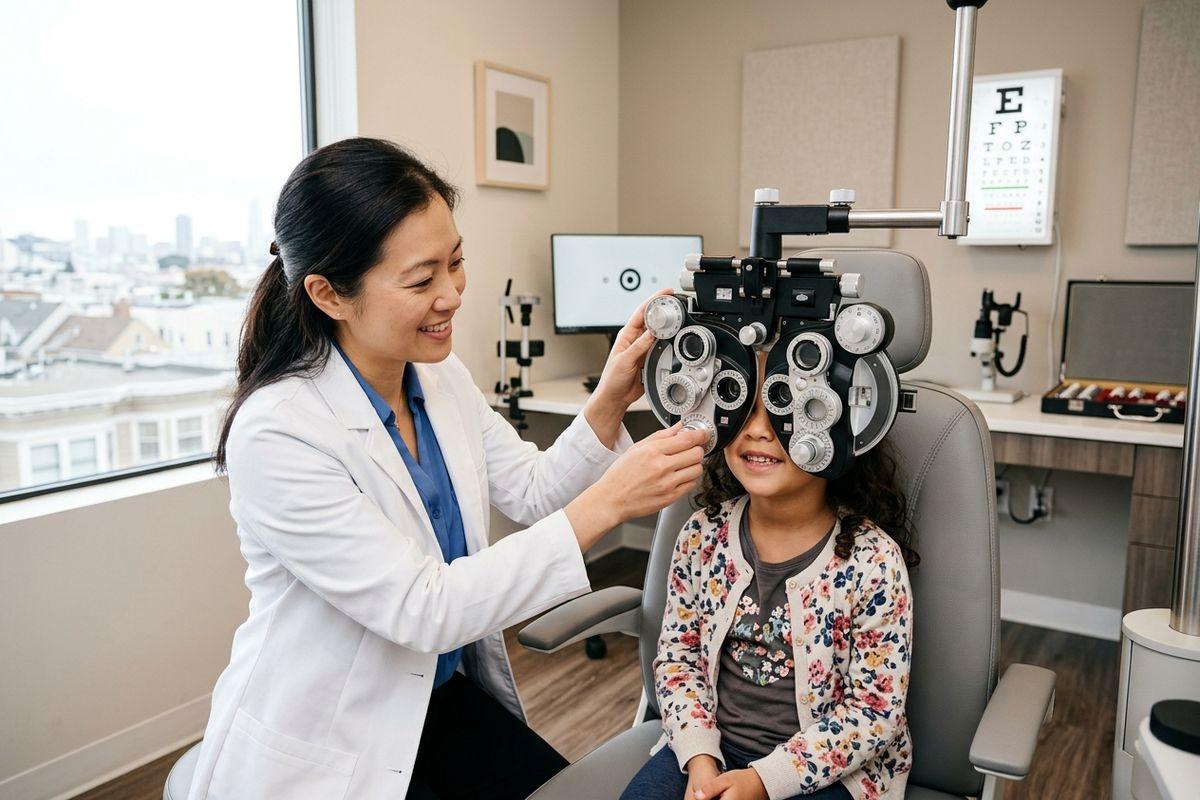
School tests miss many hidden visual issues because they only check distance vision. A child can pass a school screening but still struggle reading because of their vision. Full eye exams check focus and eye teamwork and can therefore diagnose a wider range of issues.
Visit an Eye Doctor in Richmond District
You can find comprehensive care in Richmond District, San Francisco for your whole family.
Our team at Total Vision Richmond provides thorough evaluations for both children and adults. Regular annual visits help you catch small changes before they turn into major academic hurdles. Book an eye exam today.