

Key Takeaways
- An optometrist provides comprehensive primary eye care and tests.
- You need an ophthalmologist for major surgical procedures.
- Some local laws allow optometrists to perform minor office treatments.
- Both types of medical professionals can manage long-term eye health and prescribe medications.
- Regular visits to your optometrist can help support comfortable sight for your whole family.
You might sit down in the examination chair and wonder what treatments your local optometrist can provide. At Total Vision Richmond, we know that people living in San Francisco often confuse the different types of professionals who treat these visual issues, and we’re here to help make the distinction clear.
Optometrists do not perform major surgeries, but they can perform some minor office procedures depending on local laws. An eye doctor acts as your primary care provider for visual health. They can diagnose problems early and refer you to the right ophthalmologist when you need more extensive medical care.
What an Optometrist Does for Your Eyes
Signs You Need an Exam
Optometrists handle day-to-day eye appointments, including updates to your lens prescription. Schedule an appointment if you experience these or other changes in your sight:
- You need to squint to see objects at a distance.
- You notice frequent headaches after viewing an object in the distance.
- You notice that close-up text that used to be clear seems blurry.
Primary Vision Care and Tests
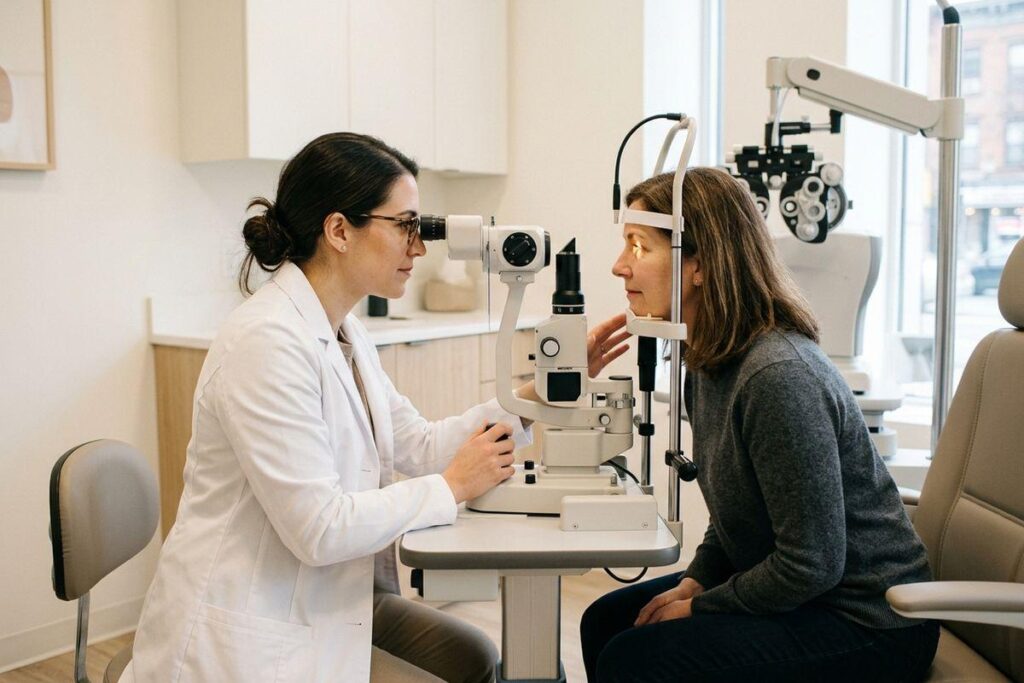
Your optometrist can evaluate your overall visual health during routine visits. They look at the delicate structures inside your eye to detect signs of disease. Many visual conditions develop slowly without any symptoms, which is why catching these issues early helps keep your eyes healthy as you age.
Modern diagnostic tools help the team support your family’s eyes. Your optometrist uses specialized equipment to map the surface of your eye and find the right prescription for your daily needs. This helps your glasses fit well and provide clear sight for work or school.
The Difference Between Optometrist and Ophthalmologist
Ophthalmologist Education and Skills
Ophthalmologists are medical doctors who complete medical school and further specific medical training. This extensive education means they can perform major surgeries on the delicate tissues of your eyes.
They manage complex diseases that severely affect your vision. You may be referred to an ophthalmologist if you need a cataract removed or your retina (at the back of the eye) repaired. The eye surgeon operates directly on your eye to correct the problem.
When to See Each Professional
See an optometrist for primary care and new glasses. They can monitor your overall eye health and track subtle changes in your vision over time. Your regular eye doctor keeps your prescription updated so you can drive comfortably at night and read menus clearly in dim restaurants.
You’ll be referred to an ophthalmologist for major surgical needs. Both eye doctors work together to maintain your health.

Minor Procedures by Optometrists
Simple Office Procedures
Your local eye doctor can handle certain minor issues right in the exam room. Depending on state law and their certifications, some optometrists can perform minor procedures involving the eyelids, such as treating certain cysts.
Your eye doctor might treat misdirected eyelashes that scrape against your cornea. They can also insert punctal plugs to retain tears for dry eye. These tiny devices block the small drainage channels near your nose so natural tears stay on the surface of your eye longer, helping improve dry eye symptoms.
State Laws and Local Rules
The specific treatments an optometrist provides depend entirely on local laws, so you should always check your state’s regulations for specific allowed procedures in your region. Your eye doctor can explain what treatments they offer in their office and refer you to an ophthalmologist for procedures outside their scope of practice.
What Your Eye Doctor in San Francisco Can Do
Regular Exams for Family Health
You can support your long-term sight with regular eye exams. They can reveal changes in your vision you might not notice on your own, making an eye exam an important part of your overall health routine.
Schedule Your Eye Exam
If you’re looking for your next regular eye exam or are curious about a referral to an ophthalmologist, we encourage you to schedule your appointment today.