
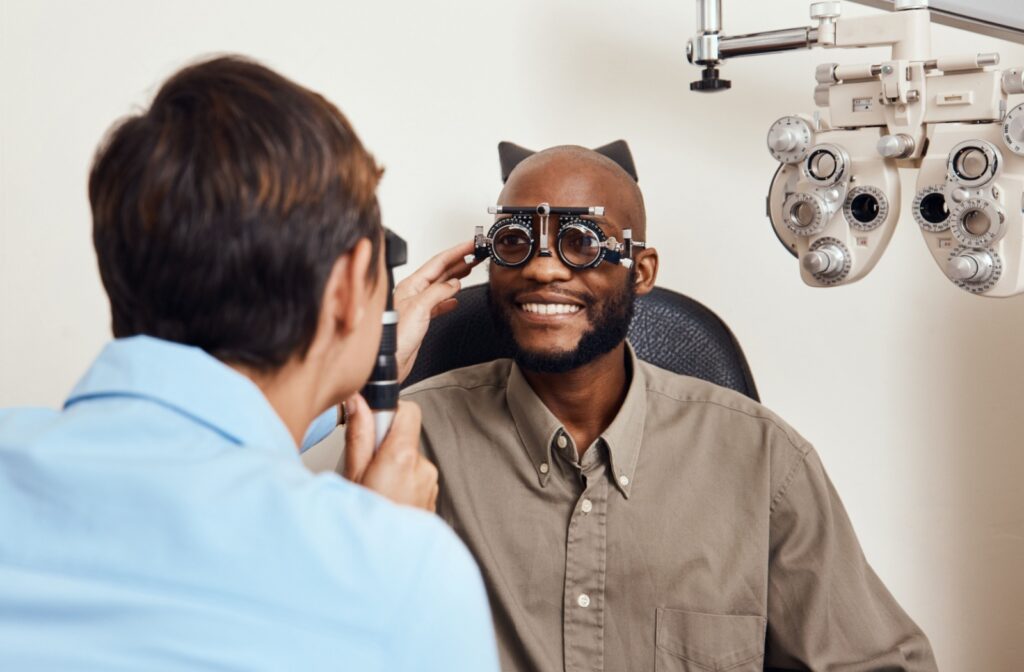
You might notice words looking fuzzy when you read, or maybe you squint more often when driving at night. Total Vision Richmond sees these symptoms daily and knows that they can be signs of eye conditions that affect many adults. Our team can help you understand what might be happening.
The most common vision problems in adults include refractive errors, age-related conditions, and diabetic eye complications. These can include conditions like nearsightedness, farsightedness, cataracts, age-related macular degeneration, glaucoma, and more. Each condition affects your sight differently, but early detection through comprehensive eye exams can help protect your vision.
Refractive Errors
Your eye is often compared to a camera, focusing light on the back of your eye (the retina) to create clear images. When this focusing system doesn’t work properly, you develop what eye doctors call refractive errors.
Nearsightedness and Farsightedness
Nearsightedness makes distant objects appear blurry, while close-up objects remain clear. If you have myopia, you might struggle to read road signs or see faces across a room. Farsightedness is the opposite: Reading books or checking your phone becomes difficult because nearby objects look fuzzy.
Astigmatism
Astigmatism affects vision at all distances. If you have astigmatism, your cornea (the clear outer layer of your eye) or lens has an irregular shape, which scatters light and creates blurred or distorted images.
Presbyopia
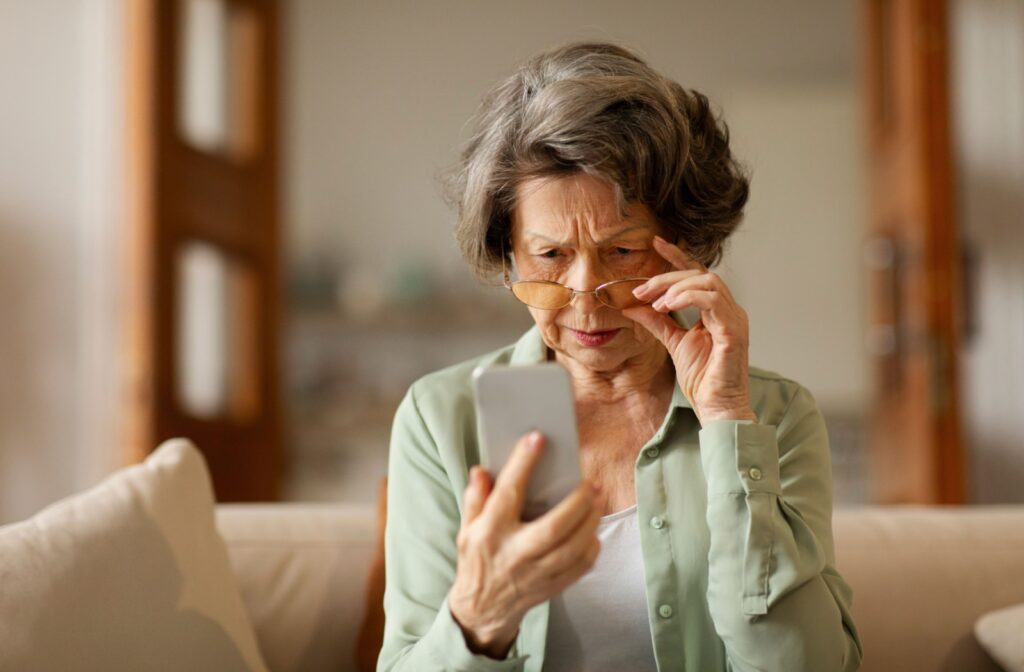
Around age 40, you might notice something frustrating happens when you try to read. The menu at restaurants looks blurry, and you need to hold your phone farther away from you to see the words on the screen clearly.
This is called presbyopia, and it happens because the lens in your eye becomes less flexible over time. Your eye muscles work harder to focus on close objects, but they can’t adjust as easily as they used to. Reading glasses, bifocals, or progressive lenses can help restore your close-up vision.
Age-Related Conditions That Affect Central Vision
As you age, certain parts of your eye undergo natural changes that can impact how well you see. These conditions can develop gradually and often go unnoticed in their early stages.
Cataracts
Cataracts form when proteins in the lens of your eye clump together, creating cloudy areas that block light. In later stages of cataracts, you might notice that colors look faded, lights seem too bright, or you see halos around lamps at night.
Most people develop cataracts after age 60, though they can appear earlier. The good news is that cataract surgery can help. During the surgery, the cloudy lens is replaced with a clear artificial one, improving sight.
Age-Related Macular Degeneration (AMD)
Your macula is the small area in the back of your eye responsible for sharp central vision. When it is affected by AMD, reading, driving, and recognizing faces can become challenging. As it progresses, you might notice a dark or empty spot in the center of your visual field.
There are 2 types of macular degeneration: Dry and wet. Dry macular degeneration progresses slowly as cells in the macula break down over time. Wet macular degeneration involves blood vessels that leak fluid, resulting in rapid vision changes that need immediate treatment.
Glaucoma
Glaucoma damages your optic nerve (the nerve that sends signals to your brain), often because of increased pressure inside your eye. Glaucoma can progress without symptoms, which is why eye exams are important for detecting it before permanent damage happens.
As glaucoma progresses, you may bump into objects on your sides or not notice cars when changing lanes. This is because this condition typically affects your peripheral (side) vision first.
Main Types You Should Know About
Open-angle glaucoma develops slowly, often without discomfort or obvious symptoms. This is because your eye isn’t draining fluid properly, leading to a gradual buildup of pressure over months or years.
Closed-angle glaucoma happens suddenly when the drainage system is completely blocked. This type of glaucoma can cause severe eye pain, nausea, and seeing rainbow halos around lights. With closed-angle glaucoma, it is important to seek out emergency care right away.
Diabetic Eye Problems and Other Complications
High blood sugar levels can damage the tiny blood vessels in your retina (the back of your eye), leading to diabetic retinopathy. You might see dark spots floating in your vision, experience blurry sight that comes and goes, or notice difficulty with night vision.
Managing your blood sugar, blood pressure, and cholesterol levels helps protect your retinal blood vessels. Regular eye exams can help catch diabetic eye changes before they affect your daily activities.
When Retinal Detachment Occurs
Sometimes the light-sensitive layer at the back of your eye, called the retina, pulls away from the wall of your eye. You might see sudden flashing lights, a shower of dark spots, or a shadow that looks like a curtain falling across your vision.
Retinal detachment requires immediate medical attention. If caught quickly, there are options to reattach your retina, like laser treatment or surgery.
When to See an Eye Doctor
Even if your vision feels fine, regular eye exams are a great way to protect your sight. Many eye conditions develop without obvious symptoms, and early treatment can help prevent vision loss.
Your family history can also affect your risk. If your parents or siblings had glaucoma, macular degeneration, or diabetes, you face a higher chance of developing these conditions.
Emergency Warning Signs
Severe eye pain combined with vision loss, especially if it comes on suddenly, may signal a serious problem that needs urgent care. These symptoms mean you should contact an eye doctor right away, even on a weekend or holiday.
Schedule Your Next Eye Exam Today
Regular eye care helps you maintain clear, comfortable vision throughout your life. The experienced team with Total Vision Richmond uses diagnostic equipment to detect eye conditions early and provide you with personalized treatment options. Schedule your comprehensive eye exam today to protect your sight.